
The “cloud” — ubiquitous and accessible network, compute and storage. It has radically changed how we create software products and think about software engineering, in some quite profound ways.
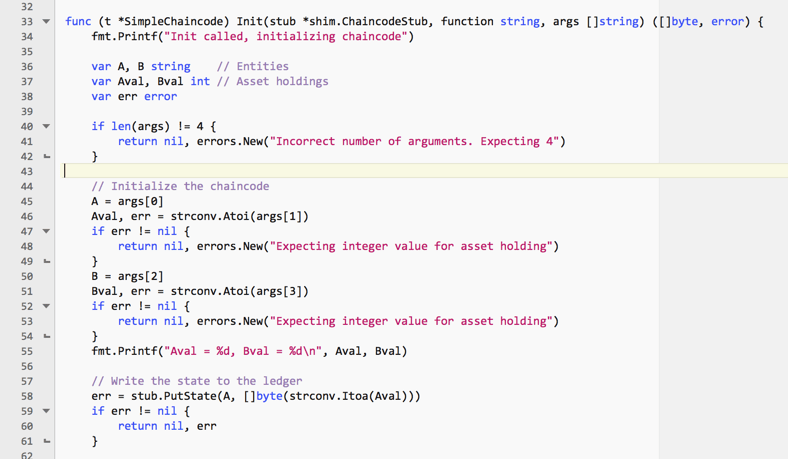
Hyper Ledger allows you to deploy custom code (today written in the Go programming language, with Java support under development) to the block chain. This code (knows as chaincode) is called in response to transactions being submitted to the block chain, or the state of the block chain being queried.

The Internet of Things (IoT) is the ubiquitous deployment of sensors, actuators, networking and small computers into the physical world.

The title comes from David Luckham’s great book of the same name.
Over the past three years of so I have been helping to define and build IBM ODM Decision Server Insights, a platform for distributed event processing based on business rules technology. As Chief Architect I’ve had the opportunity to speak to many IBM customers and prospects about their event processing challenges, as well as gaining an understanding of the market dynamics and major players.
Fundamentally event processing platforms allow companies to process event streams, looking for interesting patterns in those event streams and triggering an action when a pattern of interest is detected. Event streams may be high or low volume, and patterns may be simple or complex. In many cases multiple streams are combined (joined/fused) to create a consolidated stream.

A “block chain” is software that allows a network of companies (typically trading partners) to each keep a copy of an electronic ledger (list of transactions) whilst ensuring that each copy is in sync with the others, and that the ledger cannot be accidentally or maliciously updated by one (or more) of the partners without agreement from the majority.
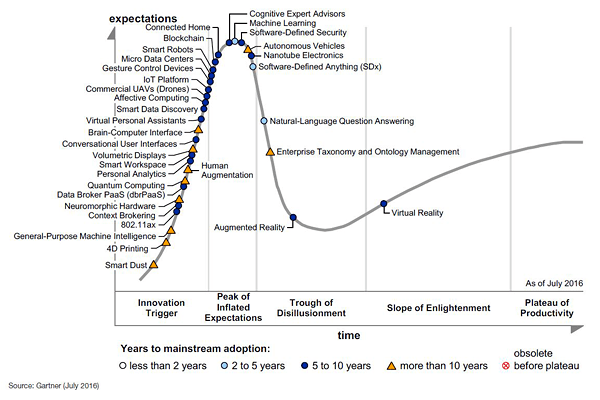
A couple of weeks ago Gartner published their latest Hype Cycle for emerging technologies. While some of the entries (and the timelines) are debatable it’s a good list that serves as a roadmap for furthering reading and technical investigation
I will be digging into the details of the most promising of these technologies over the months to come, as well as some more established technologies that are already changing the world in which we live.

Innovation That Matters, easy to say, not so easy to define… What matters in life is deeply subjective and context dependent. How about Maslow’s Hierarchy of Needs and the list below as a starting point?
 Innovation That Matters